
The Buyao (步摇) is one of the most iconic traditional Chinese hair ornaments. Its history dates back over 2,000 years to the Han Dynasty and it continued to evolve through the Tang, Song, and Ming dynasties.
The name “Buyao” literally means “to sway as one walks.” Delicate pendants attached to the ornament gently sway with each step, creating an elegant and graceful movement. In traditional Chinese culture, this graceful motion symbolizes beauty, happiness, and good fortune.
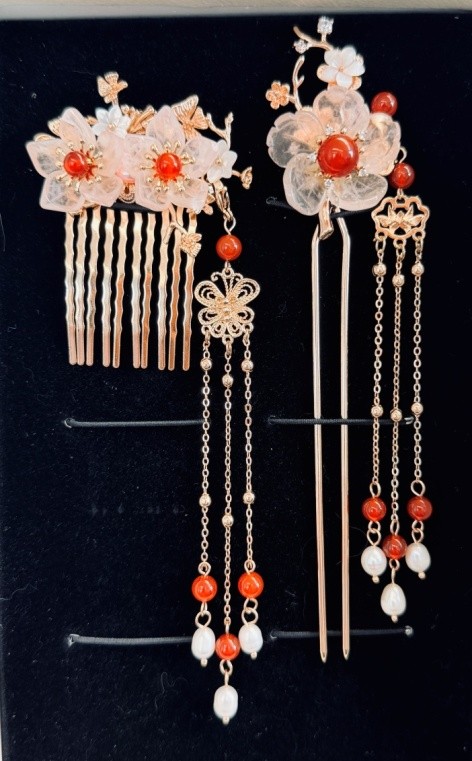
The Buyao displayed here is handcrafted using modern techniques with carved rose quartz, red agate, pearls, and metal components. While inspired by traditional Chinese designs, it also incorporates contemporary craftsmanship, bringing new life to this timeless art form.
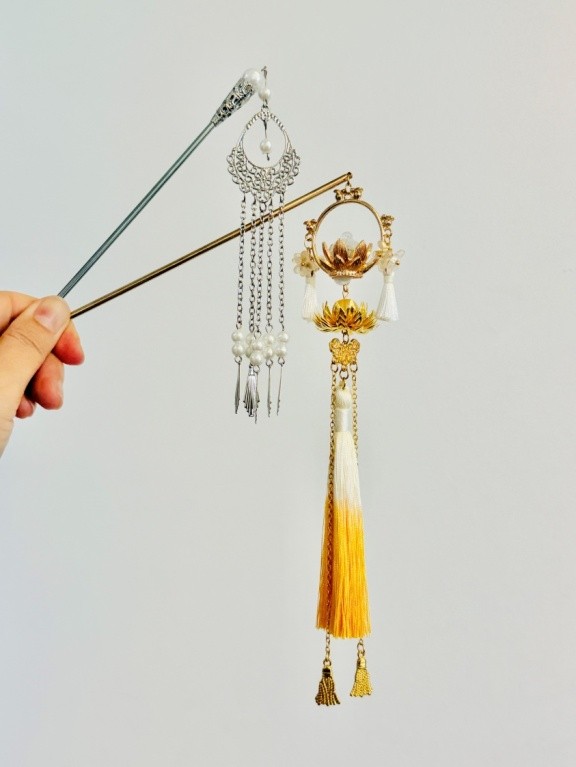
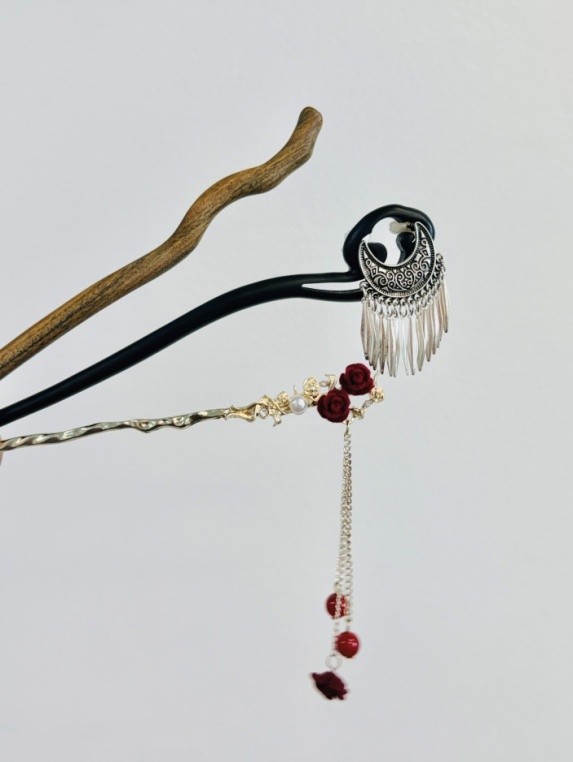
Also on display are wooden and metal hairpins, showcasing the diversity of traditional Chinese hair accessories. From the natural warmth of wood to the refined elegance of metalwork, each piece reflects the craftsmanship, artistry, and cultural heritage of China.
Through these handcrafted ornaments, we hope to share the beauty of traditional Chinese aesthetics and introduce visitors to the rich history and enduring charm of Chinese culture.
步摇是中国传统女性发饰,最早可追溯至两千多年前的汉代,并在唐、宋、明等朝代不断发展,成为中华传统服饰文化的重要组成部分。
“步摇”一词,源于佩戴者行走时,簪上的流苏会随着步伐轻轻摇曳,因此得名。古人认为,这种灵动优雅的姿态不仅展现女性的温婉气质,也象征着吉祥、美好与幸福。
本次展出的作品采用现代手工工艺制作,以粉晶雕花、南红、珍珠及金属配件搭配而成,在保留传统造型的基础上融入现代审美,让传统发饰焕发新的生命力。
同时展出的木制发簪和金属发簪,也体现了中国传统饰品丰富的材质与工艺。从天然木材的温润质朴,到金属簪饰的精致典雅,每一种发簪都承载着中国传统工艺、美学与文化内涵。
希望通过这些作品,让更多朋友了解中国传统发饰之美,感受中华文化跨越千年的艺术魅力。